


Your modular building doesn’t have to stay exactly how it rolled off the factory floor. There are simple ways to make easy updates without breaking the bank. After 25 years of building and refinishing these spaces, we’ve learned there’s a right way to upgrade them, and a few ways to make more work for yourself. Here’s our advice on upgrades, starting with interior wall finish options.
Can You Give a Modular Building a High-End Interior Finish?
Absolutely. Your modular building doesn’t have to look like a typical modular building. There are several ways to upgrade the interior finish depending on the look you want, your budget and how much finishing work your timeline and budget allows you to complete onsite.
Rose Office Systems offers three primary options for interior wall finishes:
- Factory-finished VCG (vinyl-covered gypsum sheetrock) with matching batten strips
- Bare sheetrock with bare batten strips already installed
- Bare sheetrock without batten strips so you can mud, tape and paint onsite
And there’s another option that can give you a completely different look without changing the factory wall system: You can paint the factory-finished VCG onsite.
Here is a video of Garry Cain showing you a VCG wall that was painted onsite in the Rose office building:
Let’s break down the differences in these finishes so you know what to expect…
Standard Option 1: Factory-Finished VCG With Batten Strips
This is the standard modular building finish.

The interior sheetrock walls are finished with a pre-clad vinyl wallcovering called vinyl-covered gypsum (VCG), with matching batten strips covering the seams between the sheetrock panels.
You’ll typically see a vertical batten approximately every four feet, as well as battens on interior and exterior corners.
The vinyl covering and matching battens create a durable, finished wall surface that is ready when the building arrives at the jobsite. It holds up well during transport, is easy to clean over time.
This is one of the easiest ways to keep the project moving because there is very little interior wall finishing required onsite.
Why do we use VCG in modular construction?
Modular buildings are built in a factory and then transported to the jobsite. During transportation, the building can experience movement and shifting.
Traditional drywall mud and paint can be susceptible to cracking when the building moves. VCG provides a durable factory finish that is designed with the realities of modular construction in mind.
The batten strips also serve an important purpose: they cover the joints between the gypsum panels.
And yes, those vertical strips are one of the telltale visual characteristics people associate with modular construction or manufactured homes.
But you don’t necessarily have to live with the factory finish or color. You can paint your modular building just like any other traditional constructed space.
Option 2: Bare Sheetrock With Batten Strips
If you want to customize the wall color but don’t want your painting crew to spend time mudding and taping every sheetrock seam, there’s a middle-ground option.
Rose can ship the building with bare sheetrock and bare batten strips already installed.
This means the seams are already covered, so your onsite crew doesn’t have to complete the mud-and-tape process.
They simply have to paint.
This can save both time and money onsite compared with receiving completely unfinished sheetrock and having your crew handle the entire finishing process.
It’s a good option when you want a painted interior but still want to take advantage of some of the time efficiencies of factory construction.
Option 3: Bare Sheetrock Without Batten Strips
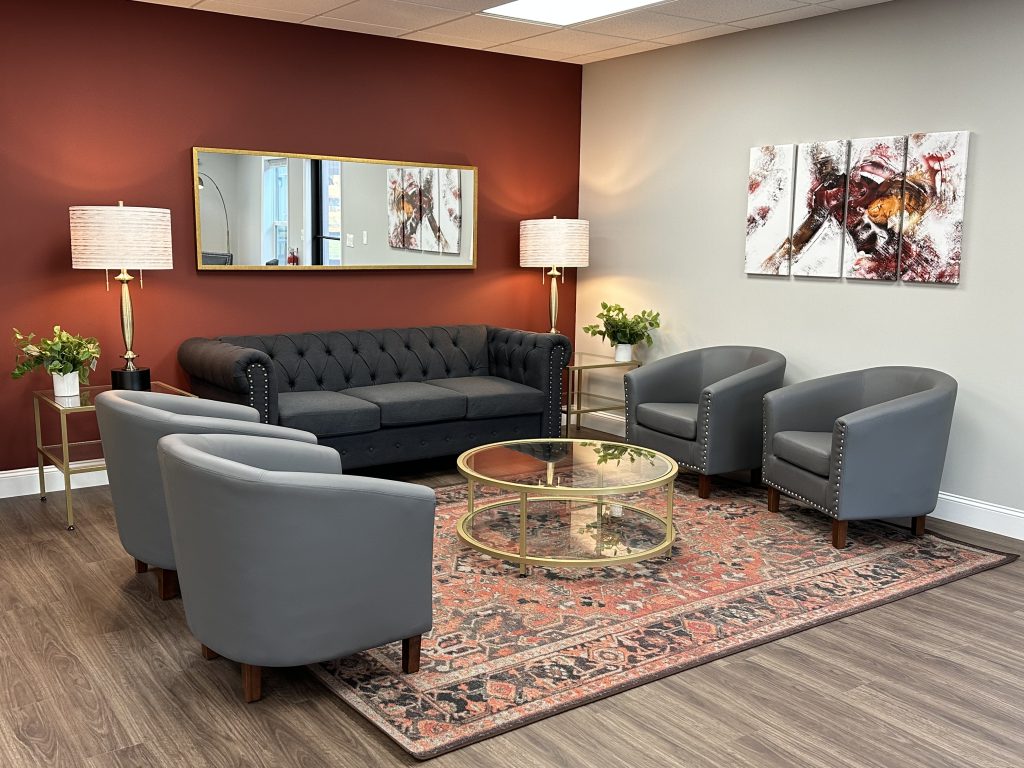
If your goal is a traditional smooth drywall finish with no visible telltale batten strips, Rose can ship the building with bare sheetrock without the batten strips installed.
Your finishing crew can then mud, tape, sand and paint the walls onsite.
This gives you the most traditional finished-wall appearance and the greatest flexibility for achieving a high-end interior design.
However, there is a tradeoff.
It can add significantly to your overall project budget, particularly on a large building.
Why doesn’t Rose mud, tape and paint the walls at the factory?
There are a couple of practical reasons.
Modular construction operates on an assembly line. Buildings move through the factory in a carefully scheduled sequence, and traditional drywall finishing requires hours of drying time and sanding between several applications. If you built an office onsite, it’s a longer process because joint compound needs time to dry completely before it can be sanded and additional coats applied and sanded again. Paint also needs drying time.
The factory cannot simply stop the production line for a day or more while drywall mud and paint dries. It’s not efficient.
There’s also the issue of transportation.
A modular building has to travel down the road before it reaches your property. The movement involved in transportation can cause traditionally finished drywall seams to crack in the delivery process.
That means a wall that was perfectly mudded, taped and painted when it leaves the factory could potentially need repairs and patching once it reaches the jobsite anyway.
For these reasons, traditional mud, tape and paint are generally better handled onsite if that is the upgraded finish you want.
Here’s what we tell existing clients who want to refresh their space without starting over.
Another Cheaper Option: Paint the Factory VCG Onsite
There’s one more way to customize the look of a modular building: Paint over the factory-finished VCG and wall battens!
Like Garry showed us in the video above, this can be a practical way to give the factory finished interior walls a more customized appearance while keeping the durable modular walls and saving money.
You will still see the batten strips, but painting the walls can dramatically change the overall feel of the space. Designer colors instantly make a room look more customized, polished and less generic.
For some projects, this is the simplest way to take a standard modular interior to the next level without a huge budget factor.
Which Interior Finish Is Right for Your Project?
There’s no single answer for every modular building.
If you want the simplest and most cost-effective option:
Choose the standard factory-finished VCG with matching batten strips.
If you want painted walls without having to mud and tape onsite:
Choose bare sheetrock with the batten strips already installed, then have your crew paint onsite.
If you want the smoothest, most traditional drywall appearance:
Choose bare sheetrock without batten strips and have your crew mud, tape and paint onsite. Just be prepared for the additional labor and cost.
If you want to customize the factory finish without starting from scratch:
Keep the factory-finished VCG and paint it onsite.
The Bottom Line
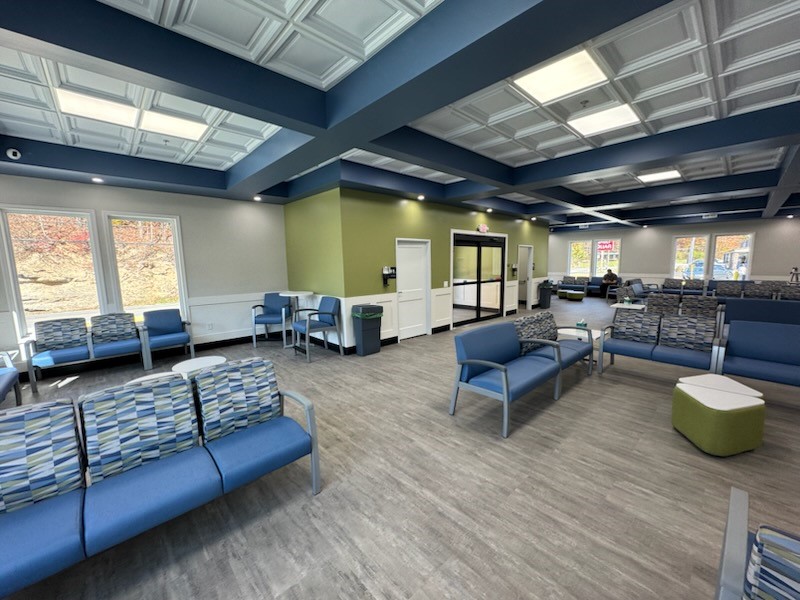
A modular building can absolutely have a high-end, custom interior.
The key is deciding which parts of the finish make sense to complete in the factory and which are better handled onsite.
At Rose Office Systems, we can help you choose the wall finish that makes sense for your building, your budget and the finished look you’re trying to achieve.
Modular doesn’t have to mean cookie-cutter.

MODULAR BUILDING INTERIOR FINISH FAQS:
Yes. Use a high-quality acrylic primer designed for glossy surfaces, apply two light coats, then finish with your paint color. Avoid all-in-one primer-and-paint products since they don’t bond well to vinyl.
The vinyl surface on VCG panels is smooth and factory sealed, so standard paint may not bond well on its own. A high-quality acrylic primer made for glossy surfaces is the key step most people skip. Apply two light coats of primer, then your finish paint. Skip the all-in-one primer-and-paint products. They don’t grip VCG the way separate coats do. We prefer Emerald by Sherwin-Williams in an eggshell finish, but any higher quality paint like Benjamin Moore or Behr will work also.
Keep the batten strips in place. Sheetrock mud will not adhere to vinyl, so you will not be able to properly cover the cracks on a wall that has pre-clad vinyl wallcoverings. Just paint over them.
For typical restrooms that get normal use, either VCG or painted walls work fine. However, in locker rooms or shower areas that get lots of steam and heavy traffic, Fiberglass Reinforced Plastic (FRP) holds up far longer than vinyl in heavy-duty restrooms, breakrooms, and cleanroom-adjacent spaces. It resists moisture and scraped-up corners in ways VCG alone can’t match, making it the standard upgrade for high-use or high-moisture rooms.
Yes! The bones of the walls are the same as normal constructions, so you could apply shiplap, board and batten, mouldings, or even faux brick or rock panels onsite. Traditional wallpaper could be used if you have bare sheetrock, but it will not stick to the vinyl wallcovering.

Your building’s finishes are not locked in forever. Whether you’re refreshing a five-year-old space or prepping a facility for a new tenant, there’s a way to get it done without ripping out walls.
Questions about what finish makes sense for your space? Give us a call, we’ve probably already solved the exact problem you’re facing.
Call to discuss availability and schedule a tour: (888) 608-1173